Amazon advertising has become increasingly competitive, making it essential for sellers to move beyond basic keyword targeting and campaign management.
If you’re looking for advanced Amazon PPC strategies 2025, understanding how to optimize advertising costs, improve keyword targeting, and maximize return on ad spend can help you build more efficient campaigns.
Amazon Pay-Per-Click (PPC) advertising allows sellers to promote their products through sponsored advertisements. However, simply launching a campaign and increasing your advertising budget does not guarantee profitability.
Successful Amazon advertising requires a combination of keyword research, bidding optimization, campaign structure, performance analysis, and continuous testing.
In this comprehensive guide, we’ll explore 15 advanced Amazon PPC strategies used in 2025 that remain relevant for sellers optimizing their advertising campaigns in 2026.
You’ll learn how to reduce wasted advertising spend, identify profitable keywords, optimize bids, improve conversion rates, and scale successful campaigns.
Whether you’re an experienced Amazon FBA seller or an ecommerce entrepreneur looking to improve advertising performance, these strategies can help you make more informed PPC decisions.
What Is Amazon PPC and Why Does It Matter?
Amazon PPC is an advertising model where advertisers generally pay when shoppers click their sponsored advertisements.
Amazon offers several advertising solutions, including:
- Sponsored Products
- Sponsored Brands
- Sponsored Display
Each advertising format serves different marketing objectives.
Sponsored Products help sellers promote individual product listings in Amazon shopping results and other eligible placements.
Sponsored Brands allow eligible advertisers to promote their brand and product collections.
Sponsored Display helps advertisers reach relevant audiences through supported placements and targeting options.
Amazon PPC can help sellers increase product visibility, attract potential customers, and generate sales.
However, advertising performance depends on several factors, including product demand, competition, pricing, conversion rates, and campaign optimization.
According to Amazon Ads’ official Sponsored Products guide, advertisers can control targeting, budgets, and bidding strategies while monitoring campaign performance.
The key to effective Amazon PPC management is not simply generating more clicks.
It’s generating profitable sales from the right customers at a sustainable advertising cost.
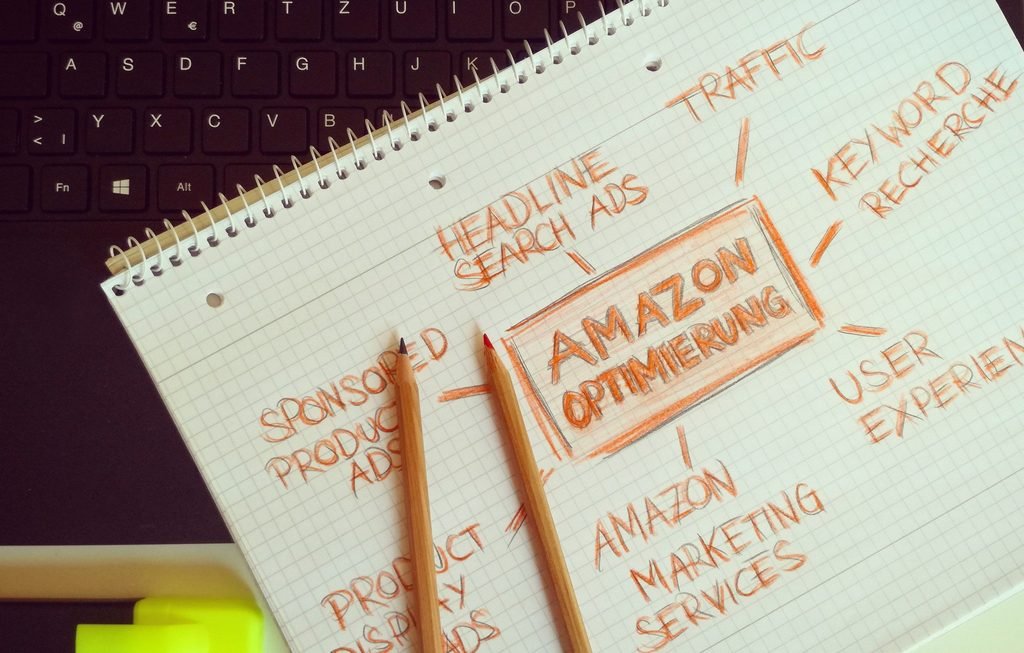
Image Search Keyword:
Amazon PPC advertising dashboard analytics
Alt Text:
Advanced Amazon PPC Strategies 2025 advertising campaign optimization dashboard
Recommended Placement: Immediately after the introduction.
1. Master Advanced Amazon PPC Keyword Research
Keyword research is the foundation of a successful Amazon PPC campaign.
However, advanced keyword research goes beyond identifying high-volume search terms.
Experienced advertisers evaluate keywords based on:
- Search relevance
- Purchase intent
- Competition
- Conversion potential
- Cost per click
- Historical advertising performance
Focus on High-Intent Keywords
Consider a seller advertising a stainless steel water bottle.
A broad keyword might be:
Water bottle
A more specific keyword could be:
32 oz insulated stainless steel water bottle
The second keyword describes a more specific product requirement.
Although long-tail keywords may attract fewer searches, they can bring highly relevant visitors who are closer to making a purchase.
However, long-tail keywords are not automatically cheaper or more profitable. Their performance must be measured.
Use Search Term Reports
Amazon’s Search Term Report helps advertisers identify the actual customer searches associated with ad clicks.
Analyze this report to discover:
- Search terms generating profitable orders
- Keywords consuming budget without sufficient sales
- New keyword opportunities
- Irrelevant searches requiring exclusions
Promising search terms can be tested in dedicated manual campaigns.
Amazon’s official Search Term Report documentation explains how advertisers can use these insights to improve targeting.
Advanced Tip: Evaluate keywords using conversion rate, ACOS, and contribution margin—not search volume alone.
2. Build a Structured Amazon PPC Campaign Architecture
One of the most effective advanced Amazon PPC strategies is organizing campaigns according to their specific objectives.
Poor campaign structure can make performance analysis difficult.
Instead of placing every keyword into one campaign, consider separating campaigns by targeting method and purpose.
Recommended Campaign Structure
| Campaign | Purpose |
|---|---|
| Automatic Discovery | Discover relevant search terms |
| Broad Match Research | Explore related keyword opportunities |
| Phrase Match Testing | Test more focused search patterns |
| Exact Match Performance | Prioritize validated search terms |
| Product Targeting | Reach shoppers viewing relevant products |
| Brand Defense | Protect visibility for your own branded searches |
This structure makes it easier to analyze spending and allocate budgets.
Why Campaign Segmentation Matters
Imagine your automatic campaign generates profitable orders, while a broad match campaign spends heavily without sufficient conversions.
If both strategies are mixed together without clear reporting, identifying the problem becomes more difficult.
Separating campaign objectives allows you to:
- Identify underperforming targeting strategies.
- Control budgets more precisely.
- Evaluate profitable keywords.
- Reduce unnecessary spending.
- Scale successful campaigns independently.
However, excessive segmentation can create unnecessary complexity, especially for small accounts.
Start with a manageable structure and expand when performance data justifies it.
3. Use Advanced Amazon PPC Bidding Strategies
Amazon offers multiple bidding strategies for Sponsored Products campaigns.
Understanding when to use each option is essential for controlling advertising costs.
Dynamic Bids — Down Only
Amazon can reduce your bid when an advertising opportunity appears less likely to convert.
This strategy can be useful when:
- You have a limited budget.
- You are testing new campaigns.
- You want tighter control over maximum bids.
- You have limited historical conversion data.
Dynamic Bids — Up and Down
Amazon can increase or decrease bids based on its assessment of conversion likelihood.
This strategy may help advertisers compete for promising placements.
However, it can also increase advertising costs.
For example, a $1 base bid can potentially increase to $2 through a 100% dynamic upward adjustment, before applicable placement adjustments.
Fixed Bids
Fixed bidding uses your selected base bid without dynamic increases or decreases, although configured placement adjustments can still apply.
Fixed bidding can be useful when testing specific bidding assumptions.
Rule-Based Bidding
Eligible Sponsored Products campaigns may also use rule-based bidding to optimize toward selected performance goals.
This approach is particularly relevant for advertisers managing larger catalogs or campaigns with established performance data.
Amazon explains these options in its official Sponsored Products bidding guide.
Advanced Strategy: Start with a bidding method appropriate for your budget and data quality. Test more aggressive bidding only when your conversion performance and margins support it.
Anchor Text:
Discover Powerful Amazon PPC Optimization Tools
4. Optimize Amazon PPC Campaigns Using Negative Keywords
Negative keywords prevent advertisements from appearing for selected irrelevant or undesirable searches.
They can help reduce wasted advertising spend.
For example, suppose you sell premium leather office chairs.
Your ads might receive clicks from shoppers searching for:
- Free office chairs
- Office chair repair
- Used office chairs
- Cheap office chair replacement parts
If these searches are not relevant to your product, they may consume your advertising budget without generating profitable sales.
Negative Exact Match
Negative exact match excludes the specified search term and applicable close variations.
This can be useful when you want to block one poorly performing search without excluding a wider category.
Negative Phrase Match
Negative phrase match excludes searches containing the specified phrase and applicable close variations.
This provides broader exclusion.
How to Identify Negative Keywords
Review your Search Term Report regularly.
Look for searches with:
- High advertising spend
- Low conversion rates
- Poor product relevance
- Unacceptable ACOS
Avoid excluding keywords based on only a few clicks.
A keyword with five clicks and no sales does not necessarily have enough data to justify exclusion.
Amazon recommends evaluating performance after sufficient clicks and testing before making permanent targeting decisions. Amazon Ads
5. Improve Amazon PPC Performance with Placement Optimization
Amazon advertisements can appear in different locations.
For Sponsored Products, major placement categories include:
- Top of Search
- Rest of Search
- Product Pages
Different placements can generate different conversion rates and advertising costs.
Example: Placement Performance
Imagine your advertising report shows:
| Placement | Spend | Sales | ACOS |
|---|---|---|---|
| Top of Search | $100 | $500 | 20% |
| Rest of Search | $100 | $250 | 40% |
| Product Pages | $100 | $200 | 50% |
In this hypothetical example, Top of Search produces the strongest advertising efficiency.
You might consider testing a higher placement bid adjustment to compete for additional impressions.
However, higher bids do not guarantee better profitability.
How Placement Adjustments Work
Suppose your base bid is $1.
If you apply a 50% Top of Search adjustment, the placement-adjusted bid becomes $1.50.
If dynamic bidding also increases that bid by 100%, the resulting maximum bid for that opportunity could reach $3.
This demonstrates why advertisers must understand how bidding adjustments interact.
Amazon’s placement bid adjustment documentation provides additional details.
Important: Review placement-level performance before increasing bids.

Image Search Keyword:
Amazon sponsored products advertising search results
Alt Text:
Amazon PPC sponsored products placement optimization and bidding strategy
Recommended Placement: After Strategy 5.
6. Calculate and Optimize Your Amazon PPC ACOS
Advertising Cost of Sales (ACOS) measures the relationship between advertising spend and attributed sales.
The formula is:
ACOS = (Advertising Spend ÷ Advertising Sales) × 100
For example:
- Advertising spend: $200
- Advertising sales: $1,000
ACOS = ($200 ÷ $1,000) × 100
ACOS = 20%
This means you spent $20 on advertising for every $100 in attributed sales.
What Is a Good Amazon PPC ACOS?
There is no universal ideal ACOS.
Your target depends on your product’s profit margin and business objectives.
A product with a 40% pre-advertising contribution margin may support a higher ACOS than a product with a 15% margin.
Calculate Break-Even ACOS
Break-even ACOS helps determine the maximum advertising cost your product can support before its contribution profit reaches zero.
For a simplified example:
| Metric | Amount |
|---|---|
| Product selling price | $40 |
| Product and other variable costs before ads | $28 |
| Contribution margin before ads | $12 |
| Break-even ACOS | 30% |
The calculation is:
Break-Even ACOS = ($12 ÷ $40) × 100 = 30%
In this example, an ACOS above 30% would generally mean the advertising-attributed sale is losing money on a contribution basis.
This simplified calculation excludes fixed overhead and other costs not included in the example.
Advanced ACOS Optimization
To improve ACOS:
- Reduce bids on inefficient keywords.
- Add relevant negative keywords.
- Improve product listing conversion rates.
- Prioritize profitable search terms.
- Evaluate product pricing.
- Optimize placement adjustments.
Remember that reducing ACOS is not always the same as maximizing total profit.
A campaign with a slightly higher ACOS may still generate more absolute profit if sales volume increases enough.
7. Use TACOS to Measure Overall Advertising Efficiency
Total Advertising Cost of Sales (TACOS) measures advertising spend relative to total product sales, including both advertising-attributed and non-advertising sales.
The formula is:
TACOS = (Advertising Spend ÷ Total Sales) × 100
For example:
- Advertising spend: $500
- Advertising-attributed sales: $2,000
- Total sales: $5,000
TACOS = ($500 ÷ $5,000) × 100
TACOS = 10%
ACOS and TACOS provide different perspectives.
| Metric | What It Measures |
|---|---|
| ACOS | Advertising spend relative to attributed sales |
| TACOS | Advertising spend relative to total sales |
| ROAS | Advertising-attributed revenue per advertising dollar |
| Conversion Rate | Percentage of clicks resulting in orders |
Why TACOS Matters
TACOS can help advertisers understand how advertising expenditure relates to overall sales performance.
However, a declining TACOS does not automatically prove that advertising caused organic sales to increase.
Changes in organic demand, pricing, seasonality, and competition can also influence the metric.
Evaluate TACOS alongside profitability, sales trends, and advertising performance.
8. Improve Product Listing Conversion Rates
Even the best PPC campaign can struggle when the product listing fails to convert visitors into customers.
Before increasing advertising budgets, evaluate your product detail page.
Optimize Your Product Title
Your title should clearly communicate the product’s main characteristics.
Include relevant information such as:
- Product type
- Important specifications
- Size or quantity
- Relevant differentiating features
Avoid unnecessary keyword repetition.
Improve Product Images
High-quality product images help customers understand what they are buying.
Consider using:
- Clear main product images
- Lifestyle photographs
- Product dimension images
- Feature comparison graphics
- Relevant product demonstrations
Ensure every image follows Amazon’s current listing requirements.
Improve Bullet Points
Explain the product’s features and benefits accurately.
Focus on answering common customer questions.
Evaluate Reviews and Pricing
Customer reviews, product ratings, delivery expectations, and pricing can influence purchase decisions.
Advertising cannot compensate indefinitely for an uncompetitive offer.
Advanced Tip: Improve your listing before significantly increasing PPC spending. Better conversion rates can improve advertising economics without requiring higher bids.
Anchor Text:
Explore Advanced Amazon Keyword Research and Product Optimization Tools
9. Use Product Targeting to Reach Competitor Audiences
Amazon PPC is not limited to keyword targeting.
Sponsored Products also supports product targeting.
This allows advertisers to target relevant product detail pages, categories, and eligible product groups.
Competitor ASIN Targeting
Suppose you sell a premium coffee grinder.
You could test targeting competing coffee grinders with:
- Similar functionality
- Comparable pricing
- Related customer needs
- Relevant product characteristics
Your advertisement may become eligible to appear when customers browse those products.
Category Targeting
Category targeting can help advertisers reach shoppers exploring a broader product category.
Depending on available options, you may be able to refine targets using product attributes.
Advanced Product Targeting Strategy
Separate your targets into groups:
Group A: Direct competitors.
Group B: Complementary products.
Group C: Relevant product categories.
Measure each group’s advertising performance independently.
Do not assume that every competitor product is worth targeting.
Focus on relevance and profitability.
10. Apply Amazon PPC Dayparting and Scheduling Strategies
Dayparting refers to adjusting advertising activity based on the time of day or day of the week.
For example, your campaign might generate stronger conversion rates during certain shopping periods.
However, this varies significantly by product category, marketplace, and customer behavior.
How to Approach Dayparting
First, collect sufficient performance data.
Next, examine conversion rates and advertising efficiency across different periods, using available reporting or approved tools.
Then test whether changing bids during specific periods improves performance.
Amazon supports schedule bid rules for eligible Sponsored Products campaigns.
These rules can increase bids during selected times or promotional events. Amazon Ads
Important Considerations
Avoid making scheduling decisions based on a few isolated sales.
Also consider:
- Time zones
- Seasonal demand
- Weekend shopping behavior
- Promotional events
- Differences between click time and order attribution
Advanced Strategy: Use scheduling to test specific opportunities rather than assuming one time of day is universally more profitable.

Image Search Keyword:
Amazon PPC advertising performance analytics charts
Alt Text:
Advanced Amazon PPC strategies 2025 performance tracking ACOS and ROAS analytics
Recommended Placement: After Strategy 10.
11. Automate Amazon PPC Bid Optimization
Managing hundreds or thousands of keywords manually can become time-consuming.
Automation can help advertisers apply consistent optimization rules.
For example, an automation system might:
- Flag keywords with high spending and low conversions.
- Identify search terms that meet profitability targets.
- Recommend bid adjustments.
- Monitor budget consumption.
- Highlight changes in advertising performance.
Example Automation Rules
Imagine a campaign with a target ACOS of 25%.
A hypothetical automation system might apply the following review rules:
| Condition | Suggested Action |
|---|---|
| ACOS below 20% with sufficient orders | Consider testing a bid increase |
| ACOS between 20% and 25% | Monitor performance |
| ACOS above 35% with sufficient data | Consider reducing bids |
| High spend with no orders | Investigate relevance and conversion |
| Strong conversions but limited impressions | Evaluate opportunities to scale |
These are illustrative rules, not universal recommendations.
The correct thresholds depend on your margins, sales volume, and statistical confidence.
Manual vs. Automated PPC Management
Manual management may work well for smaller advertising accounts.
Automation becomes more useful when:
- Campaign volume increases.
- You manage many products.
- You need consistent reporting.
- Repetitive optimization consumes too much time.
However, automated tools still require supervision.
Poorly configured rules can reduce profitable traffic or increase spending unnecessarily.
🔗 AFFILIATE LINK #3
Anchor Text:
Discover Amazon PPC Automation Tools to Save Time and Optimize Campaigns
12. Scale Profitable Amazon PPC Campaigns Carefully
Once a campaign becomes profitable, the next challenge is increasing sales without damaging advertising efficiency.
Scaling too aggressively can increase CPC and reduce margins.
Step 1: Identify Profitable Campaigns
Review:
- Advertising-attributed sales
- ACOS
- ROAS
- Conversion rates
- Advertising spend
- Contribution profit
- Available inventory
Step 2: Check Budget Limitations
A profitable campaign may be constrained by its daily budget.
However, a campaign reaching its budget does not automatically mean that increasing spending will generate equally profitable sales.
Step 3: Increase Budgets Gradually
Consider controlled budget increases rather than making several major changes simultaneously.
Monitor whether the additional spending produces incremental profitable sales.
Step 4: Expand Keyword Coverage
Test related search terms and relevant product targets.
Avoid expanding into unrelated keywords merely to generate additional impressions.
Step 5: Monitor Profitability
Continue evaluating profit, not just advertising-attributed revenue.
Advanced Tip: Scale based on contribution profit and available demand rather than focusing exclusively on low ACOS.
13. Combine Sponsored Products with Sponsored Brands
Sponsored Products can generate product-level visibility, while Sponsored Brands can help eligible advertisers promote their brand and product collections.
A combined strategy may support different stages of the customer journey.
For example:
Sponsored Products: Promote individual products for relevant shopping searches.
Sponsored Brands: Introduce customers to your brand or related product selection.
When to Use Multiple Advertising Formats
Consider expanding beyond Sponsored Products when:
- Your core campaigns have reliable performance data.
- You have sufficient advertising budget.
- Your brand meets eligibility requirements.
- You have a clear objective for additional campaigns.
Avoid launching multiple advertising formats without a measurement plan.
Track results by campaign type and consider the possibility that different advertisements may influence the same customer’s purchase journey.
14. Use Search Term Impression Share to Identify Growth Opportunities
Search term impression share can help advertisers understand their visibility for particular customer searches.
For example, imagine a relevant keyword generates a significant number of sponsored advertising impressions.
If your advertisements receive only a small portion of those impressions, there may be an opportunity to improve visibility.
However, impression share alone does not indicate whether additional traffic would be profitable.
How to Use Impression Share Data
Start by identifying keywords that already produce profitable sales.
Then evaluate their impression share where reporting is available.
Ask:
- Is the keyword highly relevant?
- Does it generate acceptable ACOS?
- Is the campaign limited by budget?
- Would increasing bids improve profitability?
- Is the product listing competitive?
Prioritize opportunities where stronger visibility could generate profitable incremental sales.
Amazon provides a Search Term Impression Share report in supported accounts and marketplaces.
15. Build a Data-Driven Amazon PPC Optimization Routine
Advanced Amazon PPC management requires consistent monitoring.
Instead of making random adjustments, develop a repeatable optimization process.
Daily Tasks
Monitor:
- Campaign spending
- Budget limitations
- Major performance changes
- Advertising eligibility
- Inventory availability
Avoid making unnecessary bid changes every few hours.
Weekly Tasks
Review:
- Search Term Reports
- Keyword performance
- Negative keyword opportunities
- Campaign budgets
- Placement performance
- Product targeting results
Identify problems and document changes.
Monthly Tasks
Evaluate:
- Overall advertising profitability
- ACOS trends
- TACOS trends
- Conversion performance
- Campaign structure
- Keyword expansion opportunities
- Product-level contribution margins
Use longer reporting windows when daily sales volume is low.
Example Monthly Optimization Checklist
| Task | Frequency |
|---|---|
| Monitor budgets | Daily |
| Review campaign performance | Several times weekly |
| Analyze search terms | Weekly |
| Review negative keywords | Weekly |
| Evaluate placement adjustments | Weekly or biweekly |
| Review product conversion rates | Weekly |
| Calculate ACOS and TACOS | Weekly or monthly |
| Evaluate overall profitability | Monthly |
The goal is to make consistent improvements based on meaningful data.

Image Search Keyword:
Amazon advertising campaign optimization ecommerce growth
Alt Text:
Amazon PPC campaign optimization strategy for ecommerce advertising growth
Recommended Placement: Before the next section.
Advanced Amazon PPC Strategies 2025 vs. Basic PPC Management
Understanding the difference between basic and advanced PPC management can help sellers identify opportunities to improve.
| Basic PPC Management | Advanced PPC Management |
|---|---|
| Broad keyword selection | Intent-based keyword research |
| One campaign for many objectives | Structured campaign segmentation |
| Limited bid adjustments | Data-driven bidding strategies |
| Basic advertising reports | Search term and placement analysis |
| Minimal negative targeting | Continuous negative keyword optimization |
| Focus on clicks and sales | Focus on contribution profit and efficiency |
| Manual campaign monitoring | Selective automation |
| Unstructured budget increases | Controlled campaign scaling |
Advanced advertising is not necessarily about using more complicated tools.
It is about making better decisions with the available data.
Common Amazon PPC Mistakes That Reduce Profitability
Even experienced sellers can make costly advertising mistakes.
Increasing Bids Without Reviewing Margins
Higher bids can generate additional traffic, but they can also increase advertising costs.
Always consider your break-even ACOS before making aggressive changes.
Ignoring Search Term Performance
A keyword may appear relevant but attract searches that rarely convert.
Review actual customer search terms rather than relying entirely on targeting keywords.
Changing Too Many Variables at Once
If you simultaneously change bids, budgets, targeting, and product pricing, it becomes difficult to identify what caused a performance change.
Test changes systematically.
Using Automation Without Monitoring Results
Automation is only as effective as the rules and data behind it.
Review automated decisions and evaluate whether they support your business objectives.
Scaling Campaigns with Insufficient Inventory
Advertising can increase demand, but inventory shortages may interrupt sales and create operational problems.
Coordinate advertising decisions with inventory planning.
Anchor Text:
Explore Professional Amazon FBA and PPC Management Solutions
Frequently Asked Questions About Advanced Amazon PPC Strategies 2025
What are the best advanced Amazon PPC strategies for 2025?
Effective strategies include advanced keyword research, negative keyword optimization, dynamic bidding, placement analysis, product targeting, conversion optimization, and data-driven campaign scaling.
Their effectiveness depends on your products, margins, and advertising performance.
How can I reduce Amazon PPC ACOS?
You can work toward reducing ACOS by improving targeting relevance, lowering inefficient bids, excluding unsuitable search terms, and improving product listing conversion rates.
However, reducing ACOS should not come at the expense of total profitability.
What is a good ACOS for Amazon PPC?
A good ACOS depends on your product’s contribution margin and advertising objectives.
Calculate your break-even ACOS before establishing a target.
Are automatic Amazon PPC campaigns better than manual campaigns?
Neither approach is universally better.
Automatic campaigns can help discover relevant searches, while manual campaigns provide greater targeting control.
Many advertisers use both approaches.
How often should I optimize Amazon PPC campaigns?
Monitor spending and campaign health frequently, but make optimization decisions based on sufficient performance data.
Weekly reviews are useful for many accounts, while larger campaigns may require more frequent monitoring.
Is Amazon PPC automation worth it?
Automation can be valuable for sellers managing large campaigns or extensive product catalogs.
However, smaller sellers may be able to manage campaigns effectively without expensive software.
What is the difference between ACOS and TACOS?
ACOS measures advertising spend relative to advertising-attributed sales.
TACOS measures advertising spend relative to total sales.
Both metrics can help evaluate advertising efficiency.
Can Amazon PPC improve organic rankings?
Advertising can generate sales and product visibility, but Amazon does not guarantee organic ranking improvements from advertising spend.
Organic performance depends on multiple factors, including product relevance, customer behavior, and marketplace competition.
Are Amazon PPC strategies from 2025 still useful in 2026?
Yes. Fundamental strategies such as keyword research, negative targeting, bid optimization, and profitability analysis remain relevant.
However, advertisers should review current Amazon Ads features and requirements because advertising tools and available settings can change.
How much should beginners spend on Amazon PPC?
There is no universal starting budget.
Your budget should reflect your available capital, product margins, expected conversion rate, and testing objectives.
Start with an amount you can afford to test and increase spending only when the results justify it.
Conclusion: How to Build a More Profitable Amazon PPC Strategy
Mastering advanced Amazon PPC strategies 2025 requires more than increasing advertising budgets or targeting popular keywords.
Successful campaign optimization depends on understanding customer search behavior, controlling advertising costs, improving product conversion rates, and making decisions based on reliable performance data.
Start by building a clear campaign structure and identifying relevant keywords.
Then use negative targeting, bidding optimization, placement analysis, and product targeting to improve efficiency.
Track ACOS, TACOS, ROAS, and contribution profit to understand whether your advertising strategy supports sustainable growth.
As your campaigns generate more data, test automation and carefully expand profitable targeting opportunities.
The most effective Amazon PPC strategy is not necessarily the one that generates the most clicks.
It is the strategy that consistently attracts relevant customers while supporting profitable business growth.