Starting an Amazon FBA business can feel straightforward until you begin researching products, calculating profit margins, contacting suppliers, and competing with established sellers.
Amazon’s Fulfillment by Amazon (FBA) program allows sellers to outsource storage, packing, shipping, customer service, and returns for eligible products. However, FBA does not automatically make a product profitable or eliminate the work required to operate a successful business.
That’s why many aspiring sellers search for the top Amazon FBA courses before investing in inventory.
A well-structured course can help you understand the business model, avoid common beginner mistakes, and develop a repeatable approach to product research and selling.
But not every course offers the same value.
Some focus on private-label products, while others teach wholesale sourcing, retail arbitrage, or broader marketplace strategies. Certain programs offer extensive coaching, while others provide self-paced lessons at a much lower cost.
In this guide, we’ll compare seven Amazon FBA training options, examine their strengths and limitations, and explain how to choose the right course for your experience level and budget.
Our goal is to help you make an informed decision—not convince you that buying a course guarantees business success.
Affiliate Disclosure: This article may contain affiliate links. If you purchase through these links, we may earn a commission at no additional cost to you.
Quick Comparison: Top Amazon FBA Courses in 2026
Before examining each option, here’s a quick overview of the programs and learning resources covered in this guide.
| Course or Training | Best For | Main Focus | Pricing Model |
|---|---|---|---|
| Amazon Seller University | Complete beginners | Amazon selling fundamentals | Free |
| Amazing Selling Machine | Private-label entrepreneurs | Building an Amazon brand | Premium paid program |
| Freedom Ticket | Structured FBA learning | Private-label selling | Access tied to eligible Helium 10 plans |
| Jungle Scout Academy | Product research learners | Research and seller workflows | Access tied to eligible Jungle Scout plans |
| Udemy Amazon FBA Courses | Budget-conscious learners | Varies by instructor | Individual course purchases |
| Proven Amazon Course | Sellers exploring multiple methods | Various Amazon selling strategies | Paid training program |
| Seller Systems | Wholesale-focused learners | Amazon wholesale operations | Paid training and coaching options |
Prices, course access, and program features can change. Check each provider’s current offer before purchasing.

1. Amazon Seller University — Best Free Amazon FBA Training
Amazon Seller University is one of the most practical starting points for anyone who wants to learn how selling on Amazon works.
Unlike third-party courses, Seller University provides educational resources directly from Amazon.
The training covers important marketplace topics, including seller account setup, product listings, fulfillment options, advertising, and account management.
What You’ll Learn
Seller University helps beginners understand the fundamental processes involved in operating an Amazon seller account.
Topics include:
- Creating and managing product listings.
- Understanding Amazon fulfillment options.
- Navigating Seller Central.
- Managing inventory.
- Learning about advertising tools.
- Understanding marketplace policies.
Pros
The biggest advantage is that the training is free.
It also provides information directly from the marketplace operator, making it particularly useful for understanding platform tools and requirements.
Cons
Seller University is not a complete business-building mentorship program.
It may not provide the same level of individualized guidance, private-label product selection strategies, or ongoing coaching offered by specialized paid courses.
Our Verdict
Best for beginners who want to understand Amazon selling before spending money on training.
Start here if you’re completely new to Amazon FBA.
2. Amazing Selling Machine — Best for Private-Label Brand Building
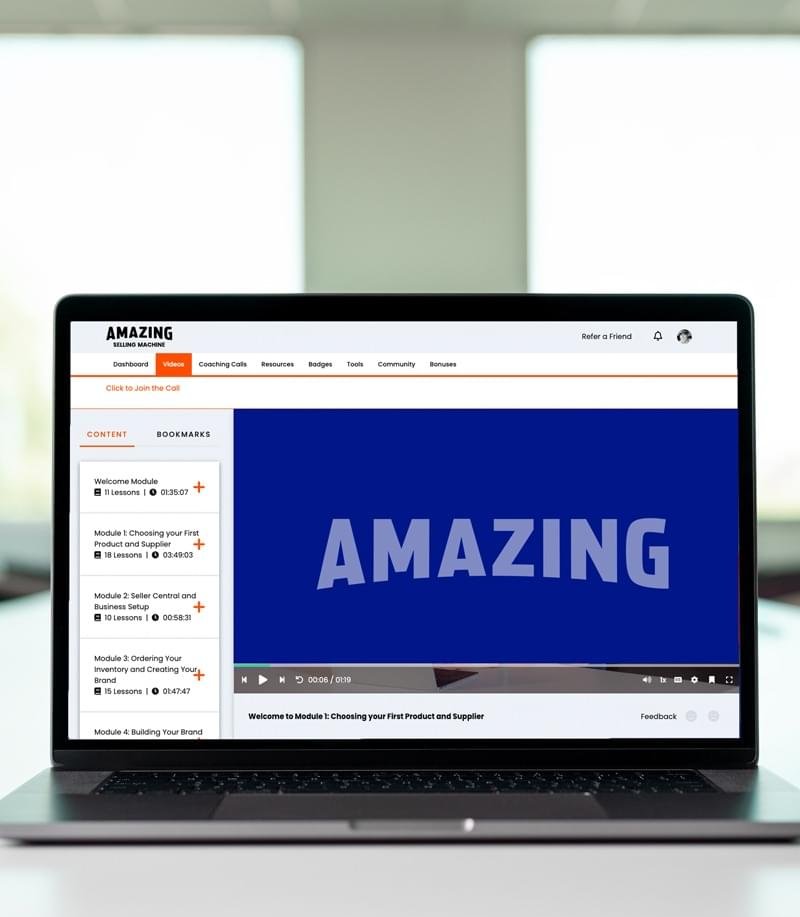
Amazing Selling Machine (ASM) is a long-established Amazon business training program associated with private-label selling.
The program focuses on helping entrepreneurs understand how to research products, develop a brand, source inventory, and launch products on Amazon.
Private-label selling involves creating or sourcing products that are sold under your own brand rather than simply reselling existing branded products.
This approach can provide greater control over branding and product positioning, but it also introduces financial and operational risks.
What You’ll Learn
The program’s core subject areas have included:
- Product opportunity research.
- Supplier identification.
- Private-label product development.
- Brand positioning.
- Amazon listing optimization.
- Product launches.
- Advertising and business growth.
The exact curriculum and included support should be verified against the current offer.
Why Consider Amazing Selling Machine?
One reason people consider ASM is its emphasis on building a business rather than simply learning how to upload products.
For someone interested in developing a long-term brand, structured training around product selection, sourcing, and marketing may be valuable.
However, the training itself is only one part of the investment.
Private-label businesses can require substantial additional capital for samples, inventory, shipping, advertising, and other operating expenses.
Pros
- Focus on private-label business development.
- Covers multiple stages of the Amazon selling process.
- Suitable for learners interested in brand building.
- Structured approach to product research and launching.
Cons
- Premium training may be expensive.
- Inventory and launch expenses are separate from course fees.
- Building a private-label brand carries meaningful financial risk.
- Success depends on execution, product demand, and competition.
Our Verdict
Best for aspiring entrepreneurs who want to explore private-label Amazon selling and have sufficient capital to manage the associated risks.
Amazing Selling Machine is worth evaluating if you’re serious about brand building, but you should carefully examine the current curriculum, support, and total costs.
Explore Amazing Selling Machine Training
3. Freedom Ticket — Best for Structured Amazon FBA Education
Freedom Ticket is an Amazon selling training program associated with Helium 10, a platform offering tools for Amazon sellers.
The training is designed to help learners understand the process of researching, launching, and managing products on Amazon.
It may be particularly appealing to people who want educational content alongside seller research tools.
What You’ll Learn
Training topics have included:
- Understanding the Amazon marketplace.
- Product research.
- Evaluating competition.
- Finding suppliers.
- Preparing listings.
- Product launch planning.
- Advertising fundamentals.
What Makes It Different?
Freedom Ticket’s relationship with Helium 10 is a distinguishing feature.
Instead of treating education and product research as completely separate activities, learners may be able to apply lessons using related seller tools.
However, access conditions depend on the current Helium 10 subscription and training offer.
Pros
- Structured learning materials.
- Focus on practical Amazon seller workflows.
- Relevant for private-label research.
- Connection to an established seller software ecosystem.
Cons
- Access may require an eligible paid subscription.
- Software costs can add up.
- Training does not eliminate the risks of choosing an unprofitable product.
- Some learners may not need every available software feature.
Our Verdict
Best for learners who want structured Amazon FBA education alongside product research software.
Before subscribing, confirm which plan includes Freedom Ticket and whether the available tools match your needs.
4. Jungle Scout Academy — Best for Product Research Beginners
Jungle Scout Academy is an educational resource associated with Jungle Scout, a software platform focused on Amazon seller research and business management.
Product research is one of the most important skills for aspiring Amazon sellers.
A product may appear popular, but popularity alone does not establish profitability.
Sellers need to consider demand, competition, fees, sourcing costs, advertising expenses, and potential risks.
What You’ll Learn
Depending on the available training, Jungle Scout educational resources may cover:
- Product research fundamentals.
- Evaluating market demand.
- Understanding competition.
- Supplier research.
- Amazon listing creation.
- Product launch considerations.
- Seller performance analysis.
Why Product Research Matters
Consider two hypothetical products.
Product A sells frequently but faces intense competition and high advertising costs.
Product B has lower demand but less competition and potentially stronger margins.
Without evaluating the complete economics of each opportunity, it’s difficult to determine which product represents the better business decision.
Research tools can help organize available information, but estimates should never be treated as guaranteed sales figures.
Pros
- Strong emphasis on research-related workflows.
- Useful for learning how to evaluate product opportunities.
- Educational resources connected to seller tools.
- Relevant to private-label beginners.
Cons
- Training access may depend on the selected subscription.
- Research estimates are not guaranteed results.
- Software cannot replace supplier verification or financial planning.
- Some features may be unnecessary for beginners.
Our Verdict
Best for aspiring Amazon sellers who want to strengthen their product research skills.
For additional guidance, read our comparison of Amazon FBA product research tools.

5. Udemy Amazon FBA Courses — Best for Budget-Conscious Learners
Udemy is an online learning marketplace that offers courses on many business and technology subjects, including Amazon FBA.
Unlike a single standardized Amazon training program, Udemy provides courses from different instructors.
This gives learners a wide range of options, but it also means that course quality, depth, and relevance can vary significantly.
What You’ll Learn
Depending on the instructor, courses may cover:
- Amazon seller account setup.
- FBA fundamentals.
- Private-label selling.
- Wholesale sourcing.
- Product research.
- Listing optimization.
- Amazon advertising.
How to Choose a Udemy Course
Rather than choosing a course based only on its title or advertised discount, examine its curriculum.
Look for a course that explains the business model you’re interested in.
For example, a private-label course may not be the best choice if your goal is to build an Amazon wholesale business.
Also check the instructor’s background, recent course updates, sample lessons, and feedback from students.
Pay particular attention to whether the material reflects current Amazon policies and seller workflows.
Pros
- Wide selection of courses.
- Flexible, self-paced learning.
- Options for different budgets.
- Suitable for exploring specific topics.
Cons
- Quality varies by instructor.
- Some material may become outdated.
- Personalized support is often limited.
- Courses may focus on narrow subjects rather than complete business development.
Our Verdict
Best for learners who want affordable, self-paced Amazon FBA education without immediately committing to premium training.
A carefully selected course can help you learn the basics, but always evaluate the instructor and curriculum before purchasing.
6. Proven Amazon Course — Best for Exploring Multiple Amazon Selling Methods
Proven Amazon Course is associated with Amazon seller educator Jim Cockrum and training focused on different ways to build an Amazon selling business.
Unlike programs concentrating primarily on private-label product launches, this training has emphasized a broader range of selling approaches.
This distinction matters because Amazon FBA is a fulfillment service, not a single sourcing strategy.
Sellers can use FBA with different business models, subject to Amazon’s rules and product eligibility.
What You’ll Learn
Training topics and available resources may include:
- Product sourcing.
- Amazon selling fundamentals.
- Inventory management.
- Wholesale-related strategies.
- Reselling approaches.
- Business development.
The current curriculum and included programs should be checked before purchasing.
Why Consider Multiple Business Models?
Private-label selling isn’t the only way to operate an Amazon business.
Some sellers prefer sourcing established products, while others want to develop their own brands.
Each approach has different requirements, risks, and operational challenges.
Learning about several methods can help beginners determine which business model better matches their experience, budget, and available time.
Pros
- Exposure to different Amazon selling approaches.
- May appeal to sellers who don’t want to focus exclusively on private label.
- Educational resources covering broader business operations.
- Relevant to learners exploring sourcing strategies.
Cons
- A broad curriculum may feel overwhelming.
- Some strategies require different skills and resources.
- Course access and support should be verified.
- Not every business model will suit every learner.
Our Verdict
Best for aspiring sellers who want to explore multiple Amazon business models before committing to one strategy.
Discover Amazon FBA Training Programs
7. Seller Systems — Best for Amazon Wholesale Training
Seller Systems is associated with training and coaching focused on Amazon wholesale selling.
Wholesale differs from private label because sellers typically source existing branded products from suppliers or distributors rather than developing their own products.
The business model requires careful supplier research, purchasing decisions, inventory planning, and attention to Amazon’s selling requirements.
What You’ll Learn
Wholesale-oriented training may cover:
- Understanding the wholesale business model.
- Finding potential suppliers.
- Evaluating products.
- Calculating profitability.
- Inventory planning.
- Managing supplier relationships.
- Developing repeatable sourcing processes.
The exact training content depends on the current program.
Why Wholesale Requires a Different Approach
A private-label seller may focus on creating a new brand and launching a product.
A wholesale seller generally focuses on obtaining suitable existing products through legitimate sourcing channels.
That means supplier relationships, purchasing costs, documentation, and competitive pricing become especially important.
Wholesale is not automatically safer or easier than private label. It has its own financial and operational risks.
Pros
- Focus on a distinct Amazon business model.
- Relevant for learners interested in supplier sourcing.
- Emphasis on wholesale operations.
- May appeal to sellers who prefer existing products.
Cons
- Wholesale inventory can require significant capital.
- Supplier approval and product eligibility can be challenging.
- Competition may affect margins.
- Coaching and training costs should be evaluated carefully.
Our Verdict
Best for learners specifically interested in Amazon wholesale rather than creating private-label products.
Before purchasing, review the program’s current training structure, coaching arrangements, and refund terms.
How to Choose the Best Amazon FBA Course
Choosing among the top Amazon FBA courses requires more than comparing marketing promises.
The best course is the one that teaches the skills you actually need at a cost you can reasonably afford.
Here are the most important factors to consider.
1. Identify Your Preferred Amazon Business Model
Start by deciding whether you’re interested in private label, wholesale, retail arbitrage, or another selling approach.
These models require different sourcing strategies and business skills.
A course focused on private-label brand development may offer limited value to someone planning to pursue wholesale sourcing.
2. Evaluate the Total Investment
Course fees represent only one potential expense.
Depending on your business model, you may also need money for:
- Inventory and product samples.
- Shipping and logistics.
- Amazon seller fees.
- Research software.
- Advertising.
- Product photography.
- Returns and unexpected costs.
Avoid spending so much on education that you have insufficient capital to operate the business.
3. Examine the Curriculum
Look for practical instruction covering product evaluation, costs, compliance, and business operations.
Be cautious of programs that emphasize revenue screenshots without explaining expenses, profitability, or risk.
A useful course should help you understand why a business decision makes sense, not simply tell you what to do.
4. Check How Recently the Training Was Updated
Amazon’s policies, fees, tools, and marketplace conditions change.
A course recorded several years ago may contain useful principles, but specific instructions can become outdated.
Check whether the program provides current training and clearly identifies material that has changed.
5. Understand the Support Offered
Some learners are comfortable studying independently.
Others prefer access to instructors, community discussions, or personalized coaching.
Consider whether you need help answering questions or reviewing business decisions.
Do not assume that an expensive course automatically includes one-on-one support.
6. Read the Refund Policy
Before purchasing a paid course, check its refund conditions.
Pay attention to eligibility requirements, deadlines, and any restrictions.
A money-back guarantee should be clearly documented rather than assumed from promotional language.
Are Expensive Amazon FBA Courses Worth It?
Expensive training can provide value when it includes high-quality instruction, relevant support, and a curriculum that matches the learner’s goals.
However, a higher price does not automatically mean better results.
A beginner may benefit more from completing free training and understanding basic seller economics before purchasing a premium program.
Someone with an established business may have different needs.
For example, an experienced seller might value advanced instruction on inventory planning or advertising more than introductory lessons.
The important distinction is between paying for useful education and paying for the expectation of guaranteed success.
No legitimate course can remove marketplace competition, operational challenges, or financial risk.
A sensible approach is to invest in training progressively as your knowledge and business requirements develop.
Free vs. Paid Amazon FBA Courses: Which Is Better?
Both free and paid Amazon FBA training can be useful.
The better option depends on your experience and what you’re trying to learn.
| Factor | Free Training | Paid Training |
|---|---|---|
| Upfront cost | Usually none | Varies |
| Beginner fundamentals | Often available | Usually included |
| Structured curriculum | Varies | Often more structured |
| Personalized support | Usually limited | Depends on the program |
| Advanced strategies | May be limited | May be included |
| Business results | Not guaranteed | Not guaranteed |
Free resources are a logical starting point for beginners.
Paid training may become worthwhile when you identify a specific knowledge gap and find a program capable of addressing it.
If you’re new to Amazon selling, our Amazon FBA beginner’s guide explains the basic process before you invest in additional education.
Common Mistakes to Avoid When Buying an Amazon FBA Course
One of the biggest mistakes beginners make is assuming that completing a course will automatically lead to a profitable business.
Education can improve decision-making, but results depend on many factors outside the course itself.
Another mistake is purchasing multiple programs before applying what you’ve already learned.
For example, someone might buy a product research course, a private-label course, and a wholesale course without deciding which business model to pursue.
This can create unnecessary expenses and confusion.
It’s also important to distinguish between revenue and profit.
A seller generating substantial sales may still face significant inventory costs, advertising expenses, platform fees, and other obligations.
When evaluating training programs, prioritize practical skills and realistic financial planning over impressive earnings claims.
Finally, avoid relying entirely on a course’s promotional materials.
Review the curriculum, current terms, instructor background, and independent feedback wherever possible.
Compare Amazon FBA Course Options
Can You Learn Amazon FBA Without Buying a Course?
Yes. It’s possible to learn many Amazon FBA fundamentals without purchasing a paid course.
Amazon provides free educational resources, and beginners can study marketplace policies, seller fees, fulfillment options, and product research concepts independently.
However, self-directed learning requires organization and discipline.
A practical learning path begins with understanding the business model, followed by studying product demand, competition, costs, and operational requirements.
Once you understand those fundamentals, you can decide whether a paid course would provide additional value.
For beginners, this approach can reduce the risk of purchasing training that doesn’t match their needs.
How Long Does It Take to Learn Amazon FBA?
There is no universal timeline.
Learning the basic concepts may take considerably less time than becoming confident in product research, supplier negotiations, inventory management, and advertising.
The learning process also depends on the business model.
Private-label sellers may need to understand product development and branding.
Wholesale sellers may spend more time learning supplier sourcing and inventory evaluation.
Rather than focusing on how quickly you can complete a course, focus on whether you can apply its lessons responsibly.
Understanding product economics and marketplace requirements is more valuable than rushing through training videos.
Frequently Asked Questions About Amazon FBA Courses
What are the top Amazon FBA courses for beginners?
Amazon Seller University is a strong free starting point. Other options worth comparing include Freedom Ticket, Jungle Scout Academy, and beginner-focused courses on Udemy.
The right choice depends on your preferred business model and learning needs.
What is the best free Amazon FBA course?
Amazon Seller University is one of the most useful free training resources because it provides education directly from Amazon.
It is especially relevant for learning Seller Central, fulfillment basics, and marketplace requirements.
Is Amazing Selling Machine worth it?
Amazing Selling Machine may be worth considering for people interested in private-label brand building.
However, prospective buyers should evaluate its current price, curriculum, support, and the additional capital required to operate a private-label business.
Can I start Amazon FBA with no experience?
You can begin learning Amazon FBA without previous selling experience.
However, operating a business requires knowledge of sourcing, costs, product eligibility, and marketplace rules.
Beginners should learn the fundamentals before committing significant money to inventory.
Do I need an Amazon FBA course to become a seller?
No. Purchasing a course is not required to become an Amazon seller.
Free educational resources are available, although some sellers choose paid training for structure or additional support.
Which Amazon FBA course is best for private label?
Amazing Selling Machine and Freedom Ticket are two programs worth evaluating for private-label education.
Compare their current features, costs, and learning formats before deciding.
Which course is best for Amazon wholesale?
Seller Systems is one wholesale-focused training option to investigate.
Before enrolling, review the current curriculum, instructor support, pricing, and refund conditions.
Are Amazon FBA courses worth the money?
They can be worthwhile when the curriculum addresses your actual learning needs and provides value relative to its cost.
However, purchasing training does not guarantee a profitable Amazon business.
Can Amazon FBA courses guarantee sales?
No. Sales and profitability depend on product demand, competition, pricing, costs, marketing, and business execution.
Be cautious of training programs that suggest otherwise.
Should beginners choose free or paid training?
Beginners should generally explore reliable free resources first.
Paid training may be appropriate later when they understand their preferred business model and can identify specific skills they need to develop.

Final Verdict: Which Amazon FBA Course Should You Choose in 2026?
The top Amazon FBA courses serve different types of learners, and no single program is the best choice for everyone.
For complete beginners, Amazon Seller University is an excellent starting point because it provides free education about the marketplace.
For people interested in private-label brand building, Amazing Selling Machine and Freedom Ticket are programs worth comparing.
If your priority is learning product research, Jungle Scout Academy may be relevant.
Budget-conscious learners can explore carefully selected Udemy courses, while Proven Amazon Course may appeal to those interested in multiple selling methods.
For wholesale-focused education, Seller Systems is another option to investigate.
Before investing, remember that Amazon FBA success depends on much more than completing training.
A course should help you make better decisions, understand financial risks, and develop practical skills.
Our recommendation: Start with free education, identify the Amazon selling model you want to pursue, and invest in paid training only when you understand what additional value it will provide.